
Beyond Copper Theft: Why Utility Physical Security Needs to Protect More Than the Substation
13 min. read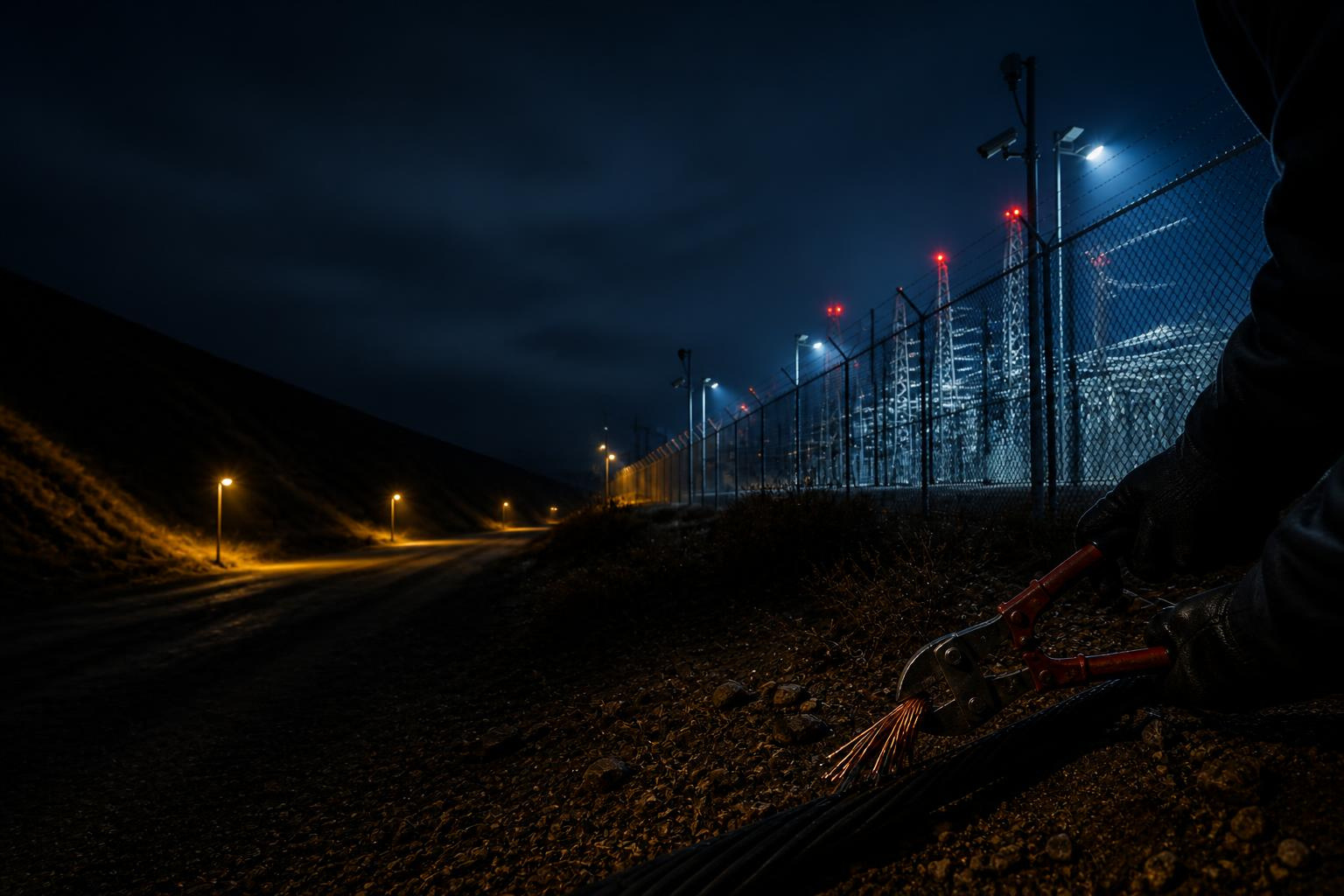
Copper and fuel theft cost utilities far more than what's stolen. See why detection-first security beats fences alone at remote sites.
On July 4, thieves cut through the fence surrounding a Danville Utilities substation in Virginia and removed approximately 40 copper grounding wires along with grounding connections from major transformers.
The value of the stolen copper was only part of the damage.
Because the system was operating under peak-load conditions, removing those grounding wires seriously damaged a transformer and caused a widespread power outage. Police arrested two suspects several days later.
Less than three weeks later, police in New York responded to another copper theft at an electric substation. That intrusion reportedly damaged electrical equipment and resulted in a fire.
These incidents highlight something utility operators have understood for years: the cost of infrastructure theft is rarely equal to the value of what was stolen.
And copper is no longer the only asset utilities need to think about.
Beyond Copper
In late July, the Security Industry Association's Utilities Advisory Board highlighted another emerging concern: fuel theft from utility yards, fleet areas, service depots, and emergency-response facilities.
Those locations can contain diesel tanks, gasoline, generators, service trucks, construction equipment, tools, materials, and other assets essential to maintaining or restoring utility operations.
Fuel is particularly attractive because it is portable, useful, and relatively easy to resell or consume. But again, the value of the commodity is only part of the risk.
A drained tank can leave vehicles unavailable. Damage to a fuel system can create environmental and safety problems. Stolen equipment can delay restoration work. A compromised utility yard can expose additional high-value assets.
The Security Industry Association argues that these losses should be considered part of the broader physical-security and business-continuity problem facing utilities rather than simply property crime.
Utilities Have a Distributed Security Problem
Utility security is difficult because there usually isn't one site to protect. There may be hundreds.
A single organization can be responsible for substations, pump stations, storage yards, warehouses, fuel depots, solar installations, generators, equipment storage, remote communications sites, water facilities, fleet areas, and construction staging locations.
Many of these facilities are intentionally located away from populated areas. That is operationally convenient. It is also convenient for someone looking for an unattended target.
Traditional physical security frequently responds by putting a fence around the site and installing a few cameras. That is better than nothing.
But the recent substation thefts demonstrate the weakness of relying on the barrier alone. In Danville, police specifically reported holes being cut through the fence.
A fence created a boundary. It did not create awareness.
The Difference Between Evidence and Intervention
Fixed cameras are valuable. They document incidents. They help investigators. They can provide evidence for prosecution.
But a recording becomes much less valuable if the first person watching it does so the next morning.
Utility security should increasingly be designed around detecting the event while it is happening. That means asking a different set of questions:
- Can we identify movement approaching the site?
- Can we determine where it is occurring?
- Can a camera automatically move toward the activity?
- Can we distinguish an animal or environmental movement from a person?
- Can someone remotely verify the situation?
- Can the system escalate before equipment is damaged?
Those questions shift security from forensic surveillance toward active situational awareness.
A Detection-First Security Model
For large or remote utility properties, the security architecture can combine multiple layers:
- Radar Detection: Monitors broad areas and identifies movement before an intruder reaches critical equipment.
- PTZ Auto-Tracking: Automatically directs cameras toward detected activity rather than requiring an operator to search multiple feeds.
- Thermal Imaging: Improves visibility across dark or difficult environments.
- AI-Assisted Verification: Helps filter nuisance activity and prioritize events requiring attention.
- Remote Monitoring: Allows a centralized operator to assess multiple unmanned sites rather than staffing every facility individually.
- Drone Verification: At appropriate sites and under applicable operational requirements, aerial surveillance can provide rapid visibility across large properties and areas outside fixed-camera coverage.
Each technology solves a different part of the problem. Together, they create a sequence:
Detect → Track → Verify → Respond
That is fundamentally different from simply recording someone entering the site.
Security Should Be Designed Around Operational Consequence
A $500 theft can create a $50,000 problem.
The stolen material itself may be cheap compared with equipment damage, outage response, crew overtime, replacement components, environmental cleanup, service disruption, emergency restoration, and public-safety consequences.
That is why utility physical security should be prioritized according to operational impact, not just replacement value.
A roll of copper wire may not seem like a high-value asset. Grounding conductors protecting an energized transformer are different.
A tank of diesel may look like a commodity. Fuel required to deploy restoration crews after a storm is different.
A remote pump station may contain relatively little equipment. Its loss during a critical operating period is different.
The right question is not: How much is someone likely to steal?
It is: What happens to our operation if they succeed?
Protecting the Utility Beyond the Substation
Utilities have spent years thinking about copper theft, vandalism, and substation intrusion. Those threats have not disappeared. But the security perimeter has expanded.
Fuel, fleet assets, remote facilities, storage sites, communications equipment, and other distributed infrastructure increasingly deserve the same attention as traditionally protected facilities.
The objective is not to turn every utility property into a fortress. It is to recognize important activity early enough to do something about it.
Because the most expensive part of an infrastructure theft often isn't what leaves the property. It's what stops working afterward.
RadiusVision helps utilities design detection-first security for substations, yards, remote facilities, and other critical assets using radar, intelligent video, thermal surveillance, remote monitoring, and integrated security technologies. Schedule a Free Security Consultation to identify the physical-security gaps across your utility infrastructure.
Share this article: